BAC WATER
Bac Water: A Complete Informational Guide
Bac Water is a commonly used term for bacteriostatic water, a sterile preparation containing a small amount of an antimicrobial preservative. Generally, it is associated with pharmaceutical and clinical applications where a suitable diluent is required. However, because different products have different labels and regulatory requirements, it is important to understand exactly what a product contains before considering its intended use.
What Is Bac Water?
What is Bac Water? In simple terms, it refers to sterile water formulated with a preservative intended to inhibit the growth of microorganisms after appropriate handling. Therefore, bacteriostatic water is different from ordinary purified water and should not be treated as an interchangeable product.
Moreover, the term does not describe every sterile water product. Instead, it normally refers to a specific pharmaceutical preparation with defined ingredients, concentration, packaging and labelling. Consequently, checking the manufacturer’s information is essential when identifying a product.
Understanding Bacteriostatic Water
Bacteriostatic water explained starts with its basic composition. Typically, the product contains sterile water and an antimicrobial preservative, such as benzyl alcohol, depending on the formulation. As a result, the preservative can help limit microbial growth under appropriate conditions.
However, bacteriostatic properties do not mean that contamination is impossible. Instead, careful handling and adherence to the product label remain important. Furthermore, sterility and bacteriostatic activity are specific characteristics that should not be confused with general water purity.
Bac Water Uses in Medical Settings
The phrase Bac Water uses can refer to several pharmaceutical applications. In particular, certain approved formulations may be used as a diluent for medicines when the product label specifically permits that application.
Nevertheless, the appropriate diluent depends on the medicine, formulation and route of administration. Therefore, a person should never assume that bacteriostatic water is suitable for every injectable or pharmaceutical product.
In addition, healthcare professionals consider factors such as compatibility, preservatives, patient characteristics and manufacturer instructions. Consequently, professional guidance is particularly important when an injectable medicine is involved.
Sterile Water vs Bacteriostatic Water
Understanding the difference between sterile water and bacteriostatic water is useful because the products serve different purposes.
Firstly, sterile water for injection is designed to meet defined sterility requirements and generally does not contain an antimicrobial preservative. Conversely, bacteriostatic water contains a preservative intended to inhibit microbial growth.
Therefore, these products should not automatically be substituted for one another. Moreover, the correct choice depends on the medicine and its approved instructions.
Why Product Labelling Matters
Product labelling provides important information about bacteriostatic water benefits, limitations and intended applications. For example, labels can identify the active ingredients, preservative concentration, storage requirements and relevant warnings.
Furthermore, legitimate pharmaceutical products should provide clear manufacturer information and appropriate regulatory labelling. As a result, checking these details can help distinguish a properly identified product from an inadequately labelled one.
Importantly, terminology can vary between markets. Therefore, Australian consumers should consider the requirements of the Therapeutic Goods Administration (TGA) and the specific product documentation applicable in Australia.
Storage and Handling Considerations
Proper storage is another important consideration when discussing Bac Water. Generally, the manufacturer’s instructions should be followed because storage conditions can vary between products.
Additionally, users should check the container before use for visible damage, unusual appearance or other signs that the product may not be suitable. Likewise, expiry dates and packaging instructions should be observed.
However, storage information should always come from the specific product label or official manufacturer documentation. Consequently, generic online advice should not replace the instructions supplied with a regulated medical product.
Safety Considerations
Although bacteriostatic water contains an antimicrobial preservative, it is not a guarantee against infection. Instead, safe pharmaceutical handling depends on maintaining appropriate sterility and following professional instructions.
Furthermore, preservatives may not be suitable for every person or every medicine. For this reason, healthcare professionals need to consider the formulation and intended application before recommending a particular diluent.
In addition, products intended for medical use should come from legitimate and appropriately regulated sources. Therefore, buyers should be cautious about products with unclear ingredients, missing batch information or questionable labelling.
Common Questions About Bac Water
Is Bac Water the Same as Sterile Water?
No. Bac Water generally contains an antimicrobial preservative, whereas sterile water products may not. Therefore, the two should only be considered interchangeable when the relevant medicine’s approved instructions specifically allow it.
What Does Bacteriostatic Mean?
Bacteriostatic water explained simply means water formulated to inhibit the growth of bacteria under appropriate conditions. However, bacteriostatic does not mean completely immune to contamination.
Can Every Medicine Use Bac Water?
No. Compatibility depends on the specific medicine and its approved product information. Therefore, a pharmacist, doctor or other qualified healthcare professional should confirm which diluent is appropriate.
Why Does Bac Water Contain a Preservative?
The preservative is included to inhibit microbial growth in the formulation. Nevertheless, its presence does not remove the need for proper handling or compliance with the product instructions.
Choosing Reliable Information
When researching Bac Water, it is useful to prioritise authoritative information over unsupported claims. In particular, official product documentation, recognised pharmaceutical references and Australian regulatory resources can provide more dependable information.
Moreover, consumers should look for clear ingredient information, manufacturer details, batch identification and applicable regulatory information. As a result, informed research can reduce confusion between different sterile water products.
Key Takeaways
Overall, Bac Water is commonly used as a short term for bacteriostatic water, a sterile preparation containing an antimicrobial preservative. However, it is not simply the same as every sterile water product.
Furthermore, its appropriate use depends on the specific formulation, medicine, manufacturer instructions and applicable regulations. Therefore, anyone researching bacteriostatic water should verify the product label and seek professional advice where a medical application is involved.
Finally, understanding the differences between bacteriostatic water, sterile water and other pharmaceutical diluents can help consumers make better-informed decisions and avoid inappropriate substitutions.
Showing all 3 results
-
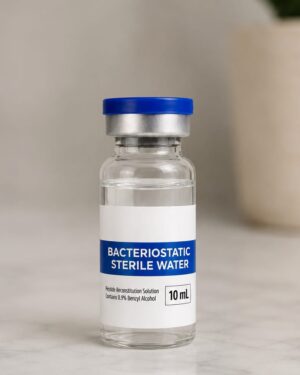
10ml Bac Water
Price range: $70.00 through $310.00Select options This product has multiple variants. The options may be chosen on the product page -
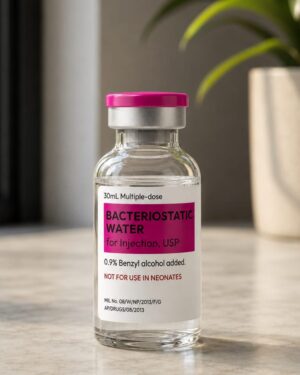
30ml Bac Water
Price range: $130.00 through $560.00Select options This product has multiple variants. The options may be chosen on the product page -
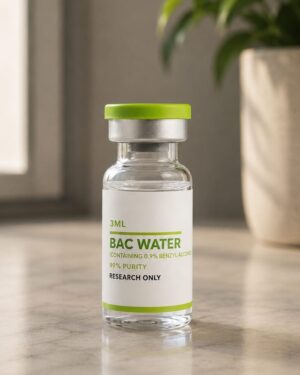
3ml Bac Water
Price range: $40.00 through $175.00Select options This product has multiple variants. The options may be chosen on the product page